
You are about to approve a token swap on Arbitrum, but the wallet shows a long contract call rather than a simple description of what will happen. Your assets are spread across Ethereum, Base, Polygon, and perhaps a bridge route in between. One wrong approval or one malicious signature could matter more than the small fee saved by choosing the fastest interface. This is the practical problem behind the search for a Rabby Chrome extension, a Rabby wallet download, and reliable transaction simulation: the wallet is not merely a place to store keys, but an interpretation layer between the user and opaque smart-contract activity.
That distinction is important. A wallet cannot make DeFi risk disappear, and a simulation is not a guarantee that a transaction will be safe. What it can do is expose more of the transaction’s expected consequences before the private key is used. For users in Germany and elsewhere in the European DeFi community, where multi-chain activity often means switching between several applications and networks, that additional context may be more valuable than another decorative dashboard feature.
What Rabby changes compared with a basic wallet workflow
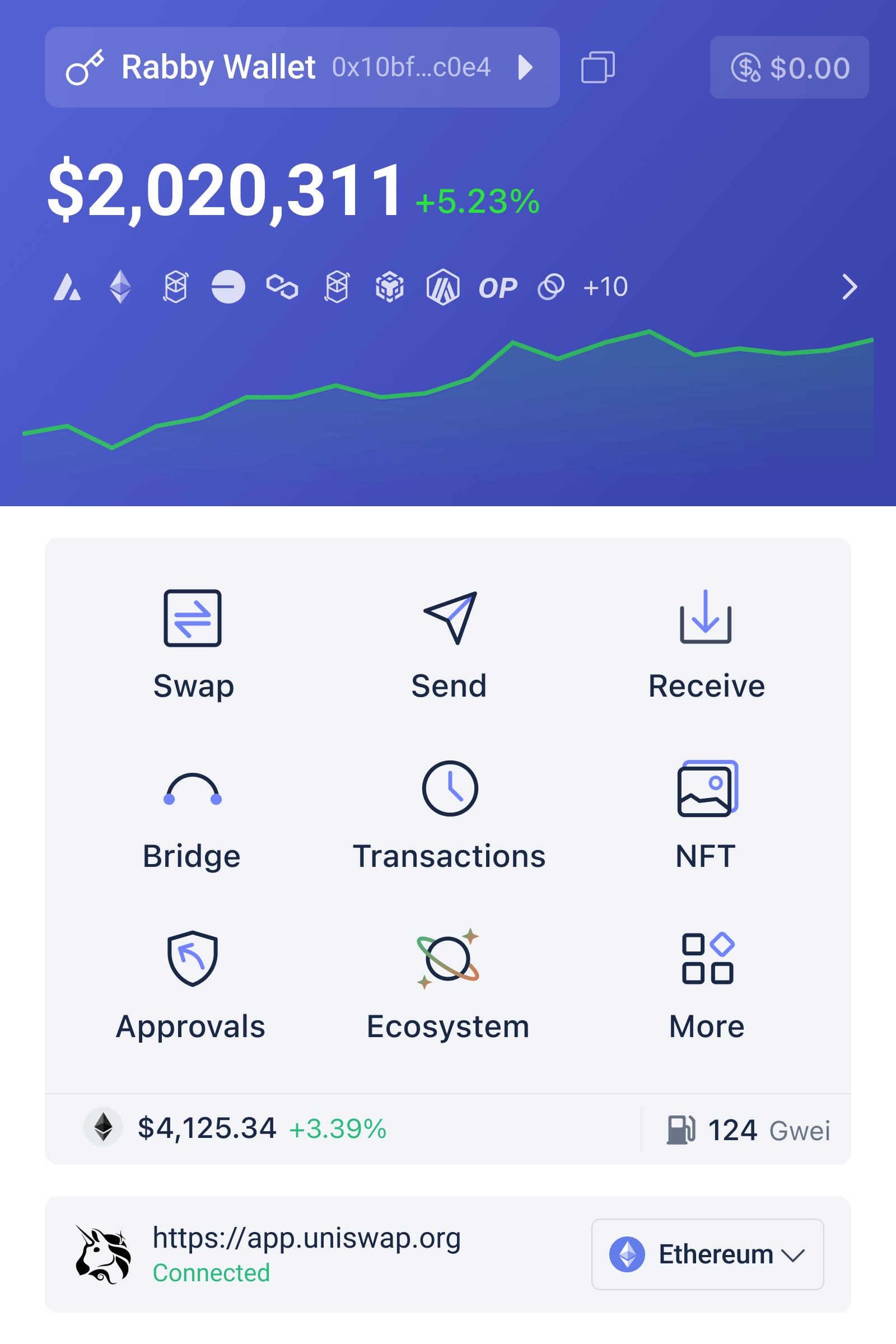
Rabby is a non-custodial wallet developed by DeBank and designed specifically for DeFi use. In a non-custodial model, the user retains control of the private keys. According to the project information, those keys are stored locally on the user’s device rather than transmitted to Rabby’s servers. That architecture changes the responsibility model: a service outage may affect convenience features, but it does not automatically transfer control of the assets to a central operator.
The browser extension is primarily available for Chrome, Brave, and Edge, with desktop applications for Windows and macOS and mobile applications for iOS and Android. Users evaluating a rabby wallet download should still verify that they are using an authentic distribution channel. Installing the right software is part of wallet security; a convincing imitation can undermine even the strongest technical safeguards.
Rabby’s main practical difference from a minimal wallet is its attempt to reduce the amount of manual chain management. It supports more than 140 EVM-compatible networks, including Ethereum, Polygon, Arbitrum, Optimism, Avalanche, Base, and BNB Chain. When a decentralised application requests a particular network, Rabby can detect the requirement and switch automatically. This removes a common source of user error, although it also creates a new habit worth developing: always check the selected chain before signing, especially when the same token name appears on multiple networks.
The project is positioned as an alternative to MetaMask, but the useful comparison is not simply which brand has more users. Rabby is oriented toward the point at which experienced DeFi users feel friction: reviewing approvals, comparing expected balance changes, moving between EVM chains, and handling fee requirements. Its code is open source under the MIT licence, allowing community inspection. Open source improves transparency and auditability, but it is not equivalent to a promise that every deployment, dependency, or user interaction is risk-free.
Transaction simulation is a risk filter, not a crystal ball
A transaction simulation is best understood as a pre-execution test. Before signing, Rabby attempts to model the transaction and present the expected changes to token balances. Instead of viewing only calldata or a contract address, the user may see that one asset is expected to leave the wallet, another is expected to arrive, and an approval may grant a contract permission to spend tokens. This converts an abstract technical request into a more familiar question: “Does the resulting state match what I intended?”
The non-obvious point is that simulation improves decision quality rather than directly improving the blockchain transaction. Rabby does not independently rewrite or create the user’s transaction; it acts as a checking layer around the signing process. The final state still depends on the actual smart contract, the selected parameters, the network, and the conditions at execution time. A simulation can therefore warn about a suspicious result without being able to reverse a signature that the user approves anyway.
There are several boundary conditions. A contract may behave differently if market prices move, liquidity changes, a block-dependent condition is reached, or a protocol’s external dependency responds differently at execution time. A malicious application can also attempt to make its request look harmless while relying on interactions that are difficult for a normal user to interpret. The sensible mental model is not “green simulation equals safe,” but “simulation is one piece of evidence that must agree with the website, contract, recipient, asset, and economic purpose of the action.”
Rabby complements simulation with a security engine that checks contracts and addresses for signals such as phishing, known hacks, and potentially dangerous infinite token approvals. This is especially relevant for approvals. An approval does not transfer tokens immediately; it gives a contract permission to spend them later, sometimes up to an unlimited amount. That distinction explains why a transaction that appears to do nothing more than “connect” or “approve” can carry substantial exposure. Users should treat approval scope as a separate decision from the swap or deposit that follows.
Multi-chain convenience creates a different kind of complexity
Rabby also integrates cross-chain tools, including bridge routing through LI.FI, and offers a swap aggregator that can compare routes involving decentralised exchanges such as Uniswap and 1inch. In principle, aggregation can reduce the need to visit several interfaces and may help users compare exchange rates and slippage. In practice, the best quoted route is not automatically the least risky route. A route involving more contracts, a bridge, or unfamiliar liquidity venues may introduce additional assumptions that are not captured by a simple price comparison.
The same trade-off appears in the Gas Account feature, which allows eligible network fees to be paid with stablecoins such as USDC rather than the native token of the chain. This is useful when a user holds assets on a network but lacks its gas token. It also makes the fee mechanism less visible, because the familiar native-token balance is no longer the only source of transaction cost. Users should confirm which asset is charged, on which network, and whether the convenience changes the effective cost of the operation.
Hardware-wallet compatibility with Ledger, Trezor, and OneKey adds a stronger protection against key theft because the signing key can remain in a separate device. It does not, however, turn a malicious transaction into a safe one. A hardware wallet can securely sign a harmful approval if the user confirms the wrong request. The layered approach is therefore more robust: local key control, hardware signing where appropriate, simulation, approval review, and independent verification of the dApp.
A practical review method for Rabby users
Before signing, start with the economic intention rather than the technical wording. Identify the asset leaving, the asset expected in return, the network, and the maximum amount exposed. Then inspect whether the request is an approval, a permit, a swap, a bridge, a deposit, or a more complex sequence. If the simulation displays an unexpected balance change, an unfamiliar recipient, or an approval larger than necessary, pause instead of assuming that the interface is merely being technical.
Next, separate convenience from trust. Automatic network switching, integrated bridges, and fee payment with stablecoins reduce friction, but every shortcut can conceal a decision that used to be visible. For larger positions, consider using a hardware wallet and a separate account for experimental protocols. Keep a smaller working balance in the browser wallet, and review old approvals periodically. These measures do not depend on a particular interface and remain useful even if a wallet changes its features.
Recent project messaging has emphasised Rabby as a broadly useful wallet for Ethereum and EVM networks, with Chrome and Brave extension access among the main entry points. The meaningful question for users is not whether one wallet can support every chain, but whether its review tools remain understandable as the number of chains, routers, bridges, and contract interactions grows. If multi-chain abstraction becomes more common, transaction previews will likely become an increasingly important design layer. Their value will depend on how accurately and clearly they communicate uncertainty, not simply on whether they display more information.
Rabby Points, earned through activities such as swaps, gas top-ups, or referrals, belong in a different category. A loyalty system may encourage engagement, but rewards should never determine whether a user takes a risky trade or approves an unfamiliar contract. Security decisions should be based on exposure and verification, not on the possibility of collecting points.
FAQ
Is Rabby transaction simulation a guarantee that a transaction is safe?
No. It is a pre-signing analysis of expected effects and can reveal suspicious balance changes, approvals, or contract behaviour. It cannot guarantee that market conditions, external protocols, or block-dependent logic will remain unchanged. Treat it as a powerful warning and interpretation tool, not as insurance against every form of smart-contract risk.
Can Rabby be used if its servers are unavailable?
The project information states that Rabby’s core signing functions remain usable offline if Rabby servers fail, because the wallet does not create or alter transactions on behalf of the user. Some connected services, scanning features, prices, or routing tools may still depend on network access or external providers, so offline signing should not be confused with complete offline DeFi functionality.
What should I check before signing on a new EVM chain?
Confirm the chain, the dApp domain, the contract address, the asset leaving your wallet, the expected asset received, the fee source, and the scope of any approval. Automatic network switching is convenient, but it does not replace these checks. For unfamiliar protocols or meaningful amounts, use a hardware wallet and test with a small transaction first.
The strongest case for Rabby is therefore not that it eliminates DeFi’s complexity. It is that it makes some of that complexity inspectable before an irreversible signature. Used with disciplined verification, transaction simulation can turn a hurried click into an informed choice. That is a modest promise, but in multi-chain finance, modest and accurate promises are precisely the ones worth trusting.